What is V7?
V7 builds tooling for labeling visual data quickly, with automation doing more of the first pass so annotators spend their time correcting rather than clicking.
The labeling product, V7 Darwin, handles a wide range of formats: images, video with object tracking, medical imaging like DICOM, PDFs, and more. Auto-annotation proposes labels that a person then reviews, which speeds up the tedious parts of segmentation and tracking. Workflows route items through labeling and review stages so quality control is built into the process instead of bolted on later.
It leans into regulated and technical work. The platform carries HIPAA, SOC 2 Type II, and ISO 27001 compliance, which matters when the data is medical scans or anything privacy-sensitive. Healthcare, life sciences, and manufacturing teams are a big part of who uses it.
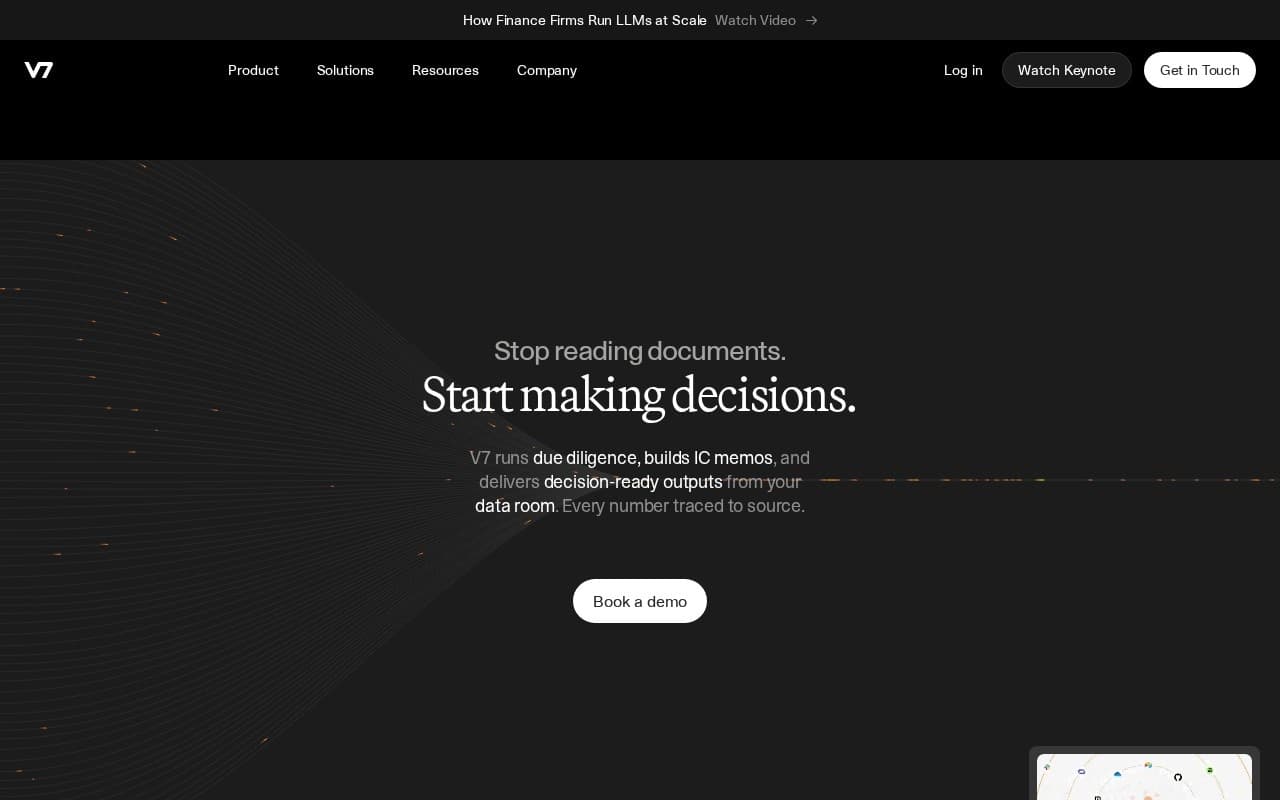
More recently V7 launched V7 Go, which points the same automation ideas at documents and knowledge work: pulling structured answers out of files, running them past a human when confidence is low, and feeding AI agents reliable data. It is a natural extension for teams whose data is part image, part paperwork.
Common ways teams use it:
- Segmenting and tracking objects across video for computer-vision models
- Annotating medical images with the compliance a hospital project requires
- Turning messy documents into structured, checked data with V7 Go
- Running human-in-the-loop review on model output before it ships
Pricing starts with a free trial, then moves to paid plans that scale by usage, features, and seats, with enterprise agreements for larger or regulated deployments.
Best for vision-heavy and document-heavy teams that want automation to carry the first pass and still keep a human in the loop. Less of a fit for a team whose entire need is text-only LLM feedback data, where a provider built around that work, like Surge, is a closer match.